Commercial Roof Replacement Cost in South Florida (2026)
What drives commercial roof replacement cost in South Florida: system, roof size, tear-off vs re-cover, deck repairs, HVHZ code and access.
10 min

Short answer: commercial roof replacement cost in South Florida depends mainly on the roof system you choose, the size and shape of the roof, whether the existing roof can be re-covered or must be torn off, how much insulation and deck is wet or damaged, and the wind-code requirements in your county. Two buildings with the same square footage can have very different prices, so the only reliable number is a written, line-item estimate after an inspection and moisture survey.
Key takeaways
System choice, tear-off vs re-cover and wet insulation drive most of the price.
HVHZ rules in Broward and Miami-Dade add product and attachment requirements.
Compare bids on identical scope, warranty and unit prices, not totals.
Repairs or coatings can defer replacement when the roof is dry.
Phasing and maintenance programs keep replacement costs predictable.
This guide explains what goes into a commercial roofing estimate, how South Florida conditions change the price, how to compare bids fairly, and how property managers, condo boards and owners keep replacement costs under control.
Why there is no honest "price per square foot" without an inspection
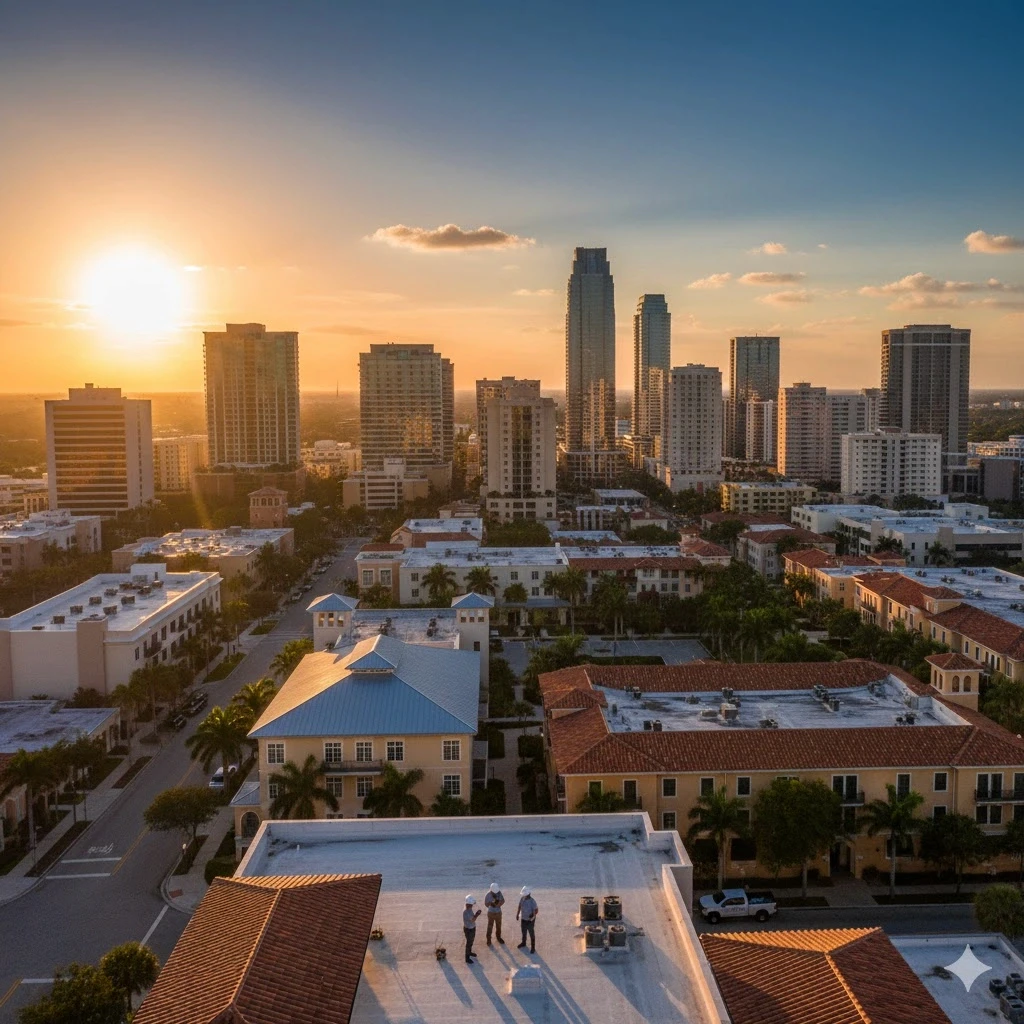
Online price-per-square-foot numbers assume a simple roof, a dry substrate and easy access. Real commercial roofs rarely match that. A warehouse with one large open roof, a medical office covered in HVAC units and a 12-story condo with parapets and a crane-only roof all need very different labor, equipment and materials. The biggest swing factor is usually hidden: how much of the existing insulation is wet. That is why CLS starts with a drone survey and moisture readings before pricing anything.
The 7 factors that set the price
1. The roof system
TPO, PVC, modified bitumen, built-up (BUR), metal and fluid-applied coating systems all carry different material and labor costs. TPO is usually the best value for large low-slope roofs; PVC costs more but resists grease and chemicals; modified bitumen and built-up roofs add multi-ply toughness for foot traffic. See TPO vs PVC vs Modified Bitumen for a side-by-side comparison.
2. Tear-off or re-cover
A re-cover installs a new roof system over the existing one after confirming the substrate is dry and sound. It avoids demolition, disposal and much of the disruption. A full tear-off is required when insulation is saturated, the deck is damaged, or the building already has the maximum number of roof layers allowed by the Florida Building Code.
3. Wet insulation and deck damage
A moisture survey shows how much insulation must be removed and replaced. Once the roof is opened, damaged wood, steel or lightweight concrete decks must be repaired. Good proposals price deck replacement as a unit cost (per sheet or per square foot) so you know the exposure before work starts.
4. Roof size and complexity
Large open roofs cost less per square foot than small roofs with many curbs, drains, skylights, parapet walls and penetrations. Every detail is hand-flashed, and details are where most leaks start, so they drive labor.
5. Wind and building code requirements
Broward and Miami-Dade counties are High Velocity Hurricane Zones (HVHZ). Roof systems there must use products with Miami-Dade Notices of Acceptance (NOAs) and meet stricter attachment, edge-metal and inspection requirements. Palm Beach, Martin and St. Lucie follow Florida Product Approval and the Florida Building Code wind requirements. Higher wind ratings mean more fasteners, more adhesive or heavier edge metal, and that adds cost.
6. Access, height and occupancy
Crane lifts, high-rise logistics, tenant protection, night or weekend work, restricted loading areas and occupied buildings all affect labor. Hospitals, schools and retail centers often need phased schedules to stay open.
7. Insulation and drainage upgrades
Adding tapered insulation to eliminate ponding water, or extra insulation to meet the energy code, increases material cost but usually pays for itself in fewer leaks and lower cooling costs.
What a complete commercial roofing estimate should include
A written scope: tear-off or re-cover, insulation type and thickness, cover board, membrane and attachment method.
Unit prices for deck replacement and wet insulation found after tear-off.
All flashing, curbs, drains, scuppers, edge metal and coping included.
Permits, engineering (if required), inspections and debris disposal.
Manufacturer system warranty term and the contractor workmanship warranty, in writing.
A schedule and, for associations and portfolios, a phasing plan.
How to compare commercial roofing bids
The lowest bid is often the one with the smallest scope. Before comparing totals, line up the bids on the same scope:
Same system, membrane thickness and attachment method.
Same insulation R-value and the same plan for wet insulation.
Same edge metal and wind rating for your county.
Same warranty type: a manufacturer system warranty is very different from a material-only warranty.
Licensing: a Florida certified roofing contractor (CCC) is required, and structural work may require a certified general contractor (CGC). CLS Roofing holds both: CCC#1332529 and CGC#1516583.
Repair, restore or replace?
Not every aging roof needs replacement. If damage is limited and the insulation is dry, targeted repairs or a coating restoration can extend service life for a fraction of the cost. Replacement makes sense when leaks are widespread, insulation is saturated, the membrane is brittle or shrinking, or the roof is at the end of its life. Our flat roof repair vs replacement guide and coating vs replacement guide walk through the decision.
Ways to control replacement cost
Re-cover when the moisture survey allows it. It avoids tear-off and disposal.
Phase the work. Replace by building or roof section to match reserves or capital budgets.
Plan before it fails. Emergency replacements cost more and limit your options. A maintenance program gives you condition data and years of warning.
Combine scopes. Pair roofing with waterproofing or recertification repairs to reduce mobilization.
Ask about wind mitigation. Wind mitigation features installed during the reroof may help with insurance.
What to expect during a CLS commercial roof replacement
Drone and moisture assessment with a written condition report.
Proposal with system options, unit prices and a schedule.
Permits, product approvals and notices to tenants or residents.
Installation by in-house crews with daily cleanup and photo updates.
Final inspection, closeout photos and warranty documents.
How South Florida conditions change the math
Roofs here face year-round UV, daily heat cycling, salt air near the coast and a hurricane season that runs June through November. Those conditions shorten the life of exposed membranes, sealants and metal, and they raise the code bar for attachment. Practically, that means three things for your budget: specify a membrane and wind rating that suit the exposure, budget for corrosion-resistant edge metal and fasteners on coastal buildings, and avoid scheduling large tear-offs at the peak of storm season when you can.
Replacement cost by property type
Condos and HOAs: high-rise access, resident notices, phased work and reserve-driven schedules. See condo and HOA roofing.
Warehouses and industrial: large open roofs keep per-square-foot costs down; metal roofs may qualify for coating instead. See warehouse roofing.
Retail and hospitality: work around tenants and guests, often at night, with careful protection of rooftop equipment. See retail and shopping center roofing.
Healthcare and office: noise, odor and access control, plus many rooftop units and penetrations. See healthcare and office roofing.
Government and schools: documented bids and schedules built around operating calendars. See government and institutional roofing.
Budgeting a replacement over several years
Owners with more than one building, and associations working from reserves, rarely replace everything at once. A practical approach is to rank each roof by condition and risk, replace the worst first, restore roofs that qualify to buy time, and put the rest on a maintenance plan. A portfolio condition report turns that into a one-to-five-year capital plan, which is far easier to fund than surprise emergencies. Property and asset managers use this to keep roof spending predictable.
Frequently asked questions
Do I need a permit to replace a commercial roof?
Yes. Commercial reroofing in Florida requires a permit and inspections. CLS pulls the permits and schedules the inspections.
What happens if the deck is damaged after tear-off?
Damaged deck is replaced at the unit price in the proposal, after you review photos. That is why unit pricing matters.
How long does a commercial roof replacement take?
From a few days to several weeks, depending on roof size, system, weather and permitting. Phased projects can run longer by design so the building stays in use.
Does insurance pay for commercial roof replacement?
Insurance may cover sudden storm damage depending on your policy, but not normal wear and age. Clear photo documentation helps. CLS offers insurance claim consultation and documents damage during the assessment.
Can a new roof go over the old one?
Sometimes. The Florida Building Code allows a re-cover only when the existing roof is dry and sound and there are not already too many layers. A moisture survey answers the question.
How long will a new commercial roof last?
Most modern low-slope systems are designed for 20 years or more when installed correctly and maintained. Maintenance is the biggest factor you control.
Want a second set of eyes on your roof? Schedule a roof inspection with drone documentation and a written report, request roof service, or call our 24/7 line at (561) 207-7693.